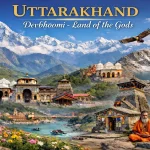
Uttarakhand, often called Devbhoomi (Land of Gods), has a rich historical and cultural past rooted in ancient Hindu scriptures, Puranas, and regional folklore. Many cities and towns of Uttarakhand were known by different names in ancient times, reflecting their spiritual, geographical, or royal significance.
Understanding the old names of cities in Uttarakhand helps travelers, historians, and culture enthusiasts connect deeply with the region’s glorious past of Kumaon and Garhwal.
Why Knowing the Old Names of Uttarakhand Cities is Important
Understanding the old names helps us:
- Trace ancient Indian history and mythology
- Understand references in Vedas, Puranas, and epics
- Learn about British-era place naming
- Preserve local culture and heritage
Old Names of Major Cities in Uttarakhand
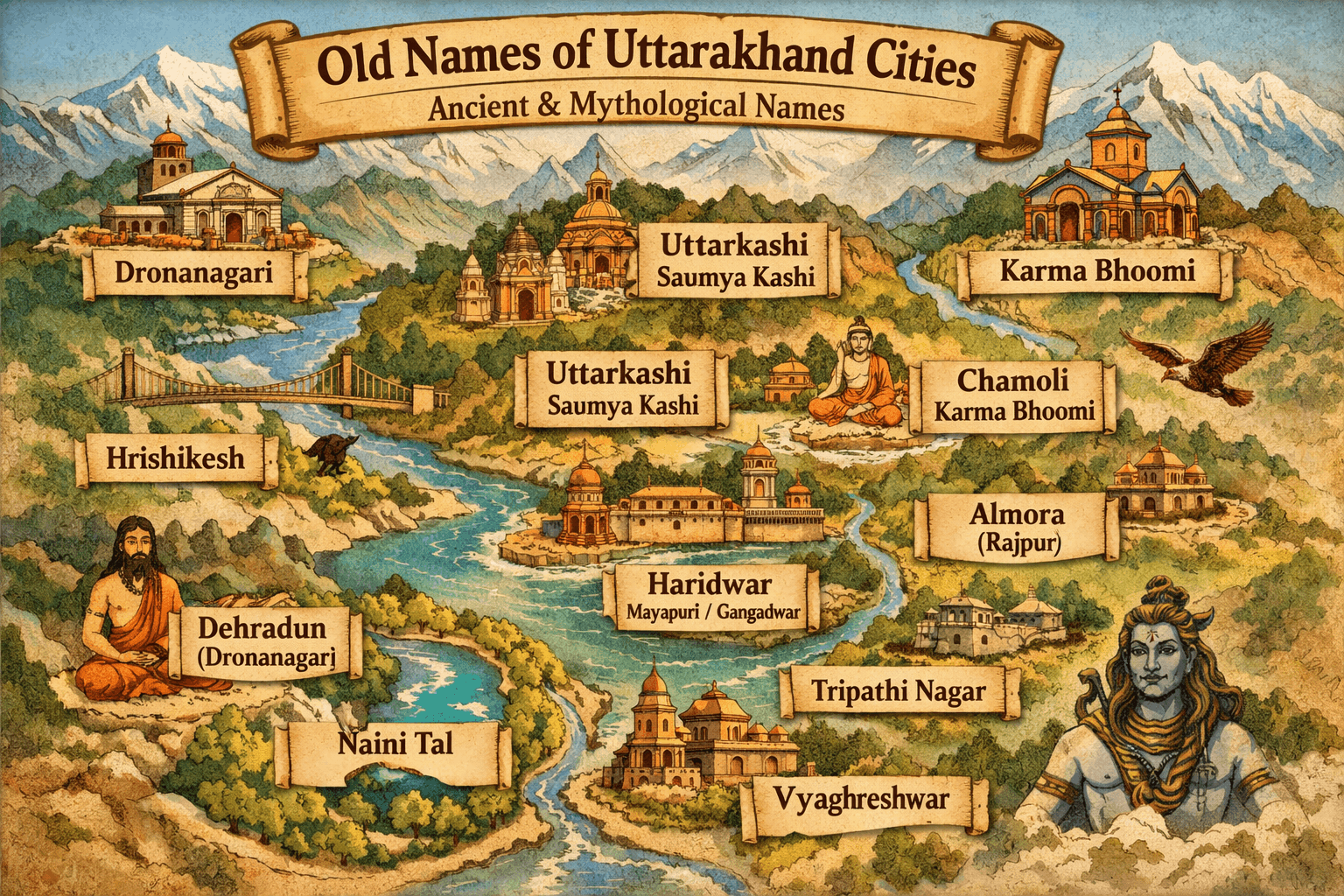
Dehradun – Old Name: Dronanagari
- Ancient Name: Dronanagari
- Derived From: Guru Dronacharya (Mahabharata)
- Historical Significance:
- Believed to be the place where Dronacharya meditated
- Mentioned in ancient Hindu texts
- Later Name: Dehra (from Dera – camp)
- Modern Name: Dehradun
Haridwar – Old Name: Mayapuri / Gangadwar
- Ancient Names:
- Mayapuri
- Gangadwar (Gateway of the Ganga)
- Religious Importance:
- Entry point of River Ganga into the plains
- Mentioned in Skanda Purana
- Modern Name Meaning: Hari (Vishnu) + Dwar (Gateway)
Rishikesh – Old Name: Hrishikesh
- Ancient Name: Hrishikesh
- Meaning: Lord Vishnu as the lord of senses
- Scriptural References:
- Skanda Purana
- Ramayana
- Known For: Meditation, yoga, sages, and saints
Nainital – Old Name: Naini Tal
- Ancient Name: Naini Tal
- Derived From: Goddess Naina Devi
- Mythological Link:
- One of the Shakti Peeths
- Associated with Sati’s eyes (Naina)
- British Era: Popularized as Nainital
Almora – Old Name: Rajpur / Almora (unchanged)
- Ancient Name: Rajpur
- Founded By: King Kalyan Chand (16th century)
- Historical Importance:
- Capital of the Chand Dynasty
- Unique Fact: Almora retained its ancient name over time
Pithoragarh – Old Name: Sor Valley Region
- Ancient Identity: Part of Sor Valley
- Historical Role:
- Trade route to Tibet
- Fort town of Kumaon region
- Modern Name: Named after Pithora Fort
Bageshwar – Old Name: Vyaghreshwar
- Ancient Name: Vyaghreshwar
- Meaning: Tiger-faced form of Lord Shiva
- Mentioned In: Shiva Purana
- Cultural Importance: Major Shaivite pilgrimage
Chamoli – Old Name: Karma Bhoomi
- Ancient Description: Karma Bhoomi (Land of righteous action)
- Spiritual Significance:
- Associated with sages and penance
- Near Badrinath Dham
- Mentioned In: Hindu scriptures
Tehri – Old Name: Tripathi Nagar
- Ancient Name: Tripathi Nagar
- Later Known As: Tehri State (Garhwal Kingdom capital)
- Historical Importance:
- Capital of Tehri Garhwal princely state
- Modern Shift: Old Tehri submerged after Tehri Dam
Uttarkashi – Old Name: Saumya Kashi
- Ancient Name: Saumya Kashi
- Meaning: Northern Kashi (Varanasi of the North)
- Religious Importance:
- Kashi Vishwanath Temple
- River Bhagirathi
Conclusion
The old names of cities in Uttarakhand reflect the region’s mythology, spiritual depth, and royal history. Preserving and sharing these ancient names helps keep the cultural identity of Devbhoomi alive.
This knowledge not only enriches travelers and history lovers but also strengthens Uttarakhand’s heritage for future generations.
FAQs (Optimized for AEO & Featured Snippets)
Q1. What was the old name of Dehradun?
A: Dehradun was historically known as Dronanagari, associated with Guru Dronacharya.
Q2. What is the ancient name of Haridwar?
A: Haridwar was known as Gangadwar and Mayapuri in ancient scriptures.
Q3. Why is Uttarkashi called Saumya Kashi?
A: Uttarkashi is called Saumya Kashi because it is considered the northern counterpart of Varanasi.
Q4. Which Uttarakhand city kept its ancient name?
A: Almora largely retained its ancient identity over centuries.