
Kedarnath Temple
Kedarnath Temple – Sacred Abode of Lord Shiva in the Himalayas
Perched at an altitude of 3,583 meters in the Garhwal Himalayas, Kedarnath Temple stands as a revered pilgrimage site dedicated to Lord Shiva. As one of the 12 Jyotirlingas and an essential stop on the Char Dham Yatra, this ancient temple draws lakhs of devotees seeking spiritual solace amidst majestic Himalayan landscapes.
️Spiritual Significance – A Divine Link to Lord Shiva
The Kedarnath Temple is more than just a pilgrimage destination—it is a powerful symbol of ancient Hindu devotion, sacred mythology, and the rugged spirit of the Himalayas. It holds immense spiritual significance for sages, devotees, and seekers from around the world.
Why is Kedarnath Temple Important?
1. One of the 12 Jyotirlingas
-
Represents one of the most powerful Shiva shrines symbolizing the eternal light (Jyoti) of Lord Shiva.
2. Part of the Char Dham Yatra (Uttarakhand)
-
A vital stop in the Char Dham circuit alongside Badrinath, Gangotri, and Yamunotri, believed to lead to moksha (liberation).
3. Centerpiece of Panch Kedar
-
After the Mahabharata war, Lord Shiva is said to have appeared in five parts across the Himalayas.
-
Kedarnath represents Shiva’s hump, making it the most important of the Panch Kedar temples.
4. Site of Penance and Salvation
-
The Pandavas meditated here to atone for their sins.
-
Considered a sacred place for mukti (liberation) and spiritual cleansing.
Mythological Relevance
According to the Skanda Purana:
-
Lord Shiva took the form of a bull to elude the Pandavas and dived into the earth at Kedarnath.
-
His hump emerged at Kedarnath, while other parts appeared at:
-
Tungnath (arms)
-
Rudranath (face)
-
Madhyamaheshwar (navel)
-
Kalpeshwar (hair)
-
Religious Practices and Beliefs
-
The Shivling at Kedarnath is pyramid-shaped, unlike traditional round lingams.
-
Daily Rudrabhishek puja, aartis, and seasonal festivals are performed.
-
Belief: Completing the Char Dham Yatra, including Kedarnath, grants freedom from rebirth.
️Spiritual Energy of the Himalayas
Surrounded by snow-clad peaks and energized by the Mandakini River, the temple’s atmosphere is revered for:
-
Enhancing meditation and prayer
-
Radiating a divine aura felt by spiritual seekers
Location and Accessibility
-
District: Rudraprayag, Uttarakhand
-
Altitude: 3,583 meters (11,755 ft)
-
Situated on: Banks of the Mandakini River
How to Reach:
-
By Air: Nearest airport is Jolly Grant Airport, Dehradun (~238 km from Gaurikund)
-
By Train: Nearest station is Rishikesh (~216 km), followed by a road journey
-
By Road: Reach Gaurikund, the last motorable point
-
By Trek: A 16 km uphill trek from Gaurikund to Kedarnath
-
By Helicopter: Services from Phata, Sersi, Guptkashi, and Dehradun
️ Best Time to Visit Kedarnath – Seasonal Guide
Due to extreme weather, Kedarnath is accessible only during certain months. Here’s a seasonal breakdown:
Temple Opening and Closing:
-
Opens: Late April or early May (Akshaya Tritiya)
-
Closes: Mid-November (Bhai Dooj)
-
During winter, the deity is worshipped in Ukhimath.
Month-by-Month Travel Guide
May – June (Peak Season)
-
Weather: Pleasant (10–15°C)
-
Ideal for: Trekking, helicopter rides
-
Tips: Book hotels and transport early; carry warm clothes
-
Keywords: best time to visit Kedarnath, Kedarnath in May and June
July – Mid-September (Monsoon Season)
-
Weather: Heavy rainfall, landslides
-
Challenges: Roadblocks, slippery trails
-
Tip: Avoid unless absolutely necessary
-
Keywords: Kedarnath in monsoon, Kedarnath weather July
Mid-September – October (Post-Monsoon)
-
Weather: Clear skies, fresh greenery (5–12°C)
-
Ideal for: Peaceful visits, photography
-
Tip: Best time for elderly and spiritual seekers
-
Keywords: Kedarnath in September, post-monsoon Kedarnath
November – April (Winter – Temple Closed)
-
Weather: Snowfall, sub-zero temperatures
-
Darshan: Visit Ukhimath for winter worship
-
Keywords: Kedarnath closed in winter, Kedarnath darshan in winter
Quick Tips for Pilgrims
-
Register for Char Dham Yatra: Official Portal
-
Medical certificate mandatory for trekking
-
Book helicopter services early (especially in May–June)
-
Monitor weather forecasts and road conditions
-
Carry essentials: ID, warm clothes, rain gear, first-aid kit
Rituals and Worship
-
Daily Aarti & Rudrabhishek: Open to all devotees
-
Special Pujas: Book in advance via official temple committee
Nearby Attractions
Enhance your pilgrimage with visits to these nearby sacred and scenic spots:
-
Bhairavnath Temple: Believed to protect Kedarnath during winters
-
Vasuki Tal: Glacial lake (~8 km from Kedarnath)
-
Adi Shankaracharya Samadhi: Just behind the temple
-
Triyuginarayan Temple: Venue of Lord Shiva & Parvati’s celestial wedding (~25 km away)
Bonus: Explore Other Panch Kedar Temples
-
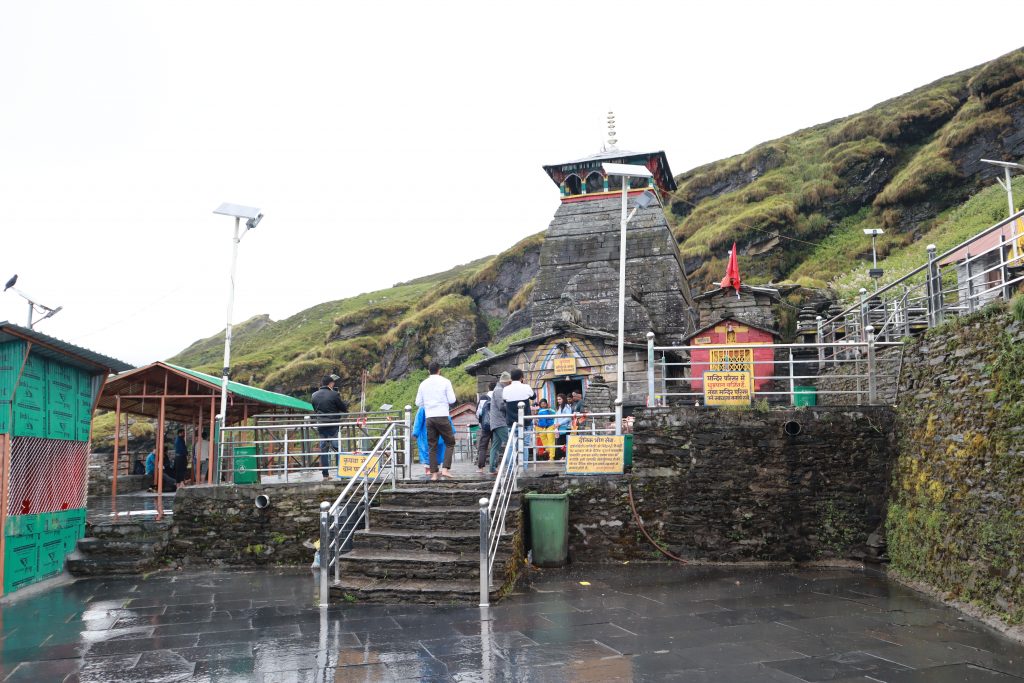
Tungnath – Highest Shiva temple in the world
-
Madhyamaheshwar, Rudranath, Kalpeshwar
How to Reach Kedarnath Temple – Travel Guide
By Air
-
Nearest Airport: Jolly Grant Airport, Dehradun (~238 km)
-
Helicopter Services:
-
From Phata, Sersi, Guptkashi
-
Premium service from Dehradun (Sahastradhara Helipad)
-
-
Keyword: Kedarnath helicopter service
By Train
-
Nearest Stations:
-
Rishikesh (~216 km)
-
Haridwar (~240 km)
-
-
Travel to Gaurikund by bus or taxi
-
Keyword: how to reach Kedarnath by train
By Road
-
Last Motorable Point: Gaurikund
-
Well-connected from:
-
Rishikesh
-
Haridwar
-
Dehradun
-
Chamoli
-
Tehri Garhwal
-
-
Transport Options: UTC buses, taxis, shared jeeps
-
Keyword: Kedarnath road route
By Trek (Gaurikund to Kedarnath)
-
Distance: 16 km steep uphill
-
Time: 6–10 hours (depending on fitness)
-
Support:
-
Ponies
-
Palkis (palanquins)
-
Limited battery carts
-
Pilgrimage Essentials
-
Registration: Mandatory via Uttarakhand Tourism site
-
Health Check: Advised due to altitude
-
Packing:
-
Warm and waterproof clothing
-
First-aid kit
-
Valid ID
-